Tuesday, April 5, 2016

So You've Been Publicly Shamed

"I suppose it's no surprise that we feel the need to dehumanize the people we hurt-before, during, or after the hurting occurs. But it always comes as a surprise. In psychology it's known as cognitive dissonance. It's the idea that it feels stressful  and painful for us to hold to contradictory ideas at the same time (like the idea that we're kind people and the idea that we've just destroyed someone). And so to ease the pain we create illusory ways to justify our contradictory behavior."
John Ronson
So You've Been Publicly Shamed

People's behavior on the internet is often atrocious. It is this fantastic tool for spreading information, but often the things that are said are inappropriate and unkind. Part of the reason for this is that people have the ability to be anonymous. It's easy to be a bully when no one will call you out.

 Jon Ronson explores why public shaming, specifically shaming that take place online, has made a comeback in today's society. Most forms of shaming we taken out of governmental laws for punishment in the late 1800's, not because they didn't work, but because they were so brutal. They have recently made a comeback on social media sites, and while conversation and transparency should be encouraged, the form of public shaming that occurs is just brutal, a form of bullying when it comes down to it, and the victims are often people with minor infractions. 

Those who do the shaming are often not held accountable for the damage done and seldom any thought is given to how it affects the victim.
"I suppose that when shaming are delivered like remotely administered drone strikes nobody needs to think about how ferocious our collective power might be.. The snowflake never needs to feel responsible for the avalanche."
 He explores the subtle sexism and racism that shows itself in what threats are used against different people (Do men people say "I hope you get fired), to women people say "I hope you get raped").

I liked this book. I think it is important, a sort of "How to be a Human Being on the Internet." It reminds us that, while we should be accountable for our mistakes, the punishment must fit the crime and social media public shaming is a punishment that is heave for the crimes that it is often used for. Ronson encourages us to be kind (that doesn't mean not standing up for whats right, bur it is in no way ok for anyone to wish job loss or rape on anyone, EVER!), and to pay attention to nuance, because it is important.

Everyone who is online should read this book. Everyone. Its funny and serious, a quick read that will have you turning pages.


One Flew Over the Cuckoos Nest

"Because he knows you have to laugh at the things that hurt you just to keep yourself in balance, just to keep the world from running you plumb crazy. He knows my thumb smarts and his girl friend has a bruised breast and the doctor is loosing his glasses, but he won't let the pain blot out the humor no more'n he'll let the humor blot out the pain."
Ken Kesey
One Flew Over the Cuckoo's Nest

This one was part of the We Read Drinks project, and I highly recommend you check it out here!

Saturday, April 2, 2016

Terrible Virtue

"The process was slow and frustrating. What little information existed was veiled in in euphemisms and hidden in puritanical ellipses."
Ellen Feldman
A Terrible Virtue

Margaret Sanger was an amazing woman. She was one who I had never heard much about, but what she did has made my life so much better. She lived from 1879 to 1966, coined the term 'birth control,' was a sex educator, and started the organizations that would eventually lead to Planned Parenthood. My life would be unbelievably different if she had not existed.

Ellen Feldman tells her story in A Terrible Virtue, and fictionalized, first person account of Sangers life. Sanger was one of thirteen children, and she saw that poor women's inability to choose the amount of children they would have and when they would have them was dangerous to the women, and a means for keeping those who were poor poor (its hard to save money with another mouth to feed). Birth control was available, but only for men and only for the rich. She did enormous amounts of research into birth control, provided information on women reproductive health (much of the information was restricted, as were the procedures and medicine that would improve women's livelihoods), and worked to provide these services to all women who needed them.
I didn't much like the book. The writing was contrived, there was no nuance or subtlety, the narration didn't sound like a person, and the letters from others to Sanger were randomly dropped in seemed contrived and didn't add to the story. While it attempted to show the complexities of the woman herself, it didn't add much context to many of her complexities and the controversies surrounding her.

The story of Sanger, however, is fascinating and important. Her struggle shouldn't be forgotten, nor her goal to provide women with health care and the ability to control their lives and bodies by choosing if and when to have children. Her fight for women's rights should not be forgotten, and it should not be believed to be over. 

The Reluctant Fundamentalist

"Such journeys have convinced me that it is not always possible to restore one's boundaries after they have been blurred and made permeable by a relationship; ourselves as the autonomous beings we previously imagined ourselves to be. Something of us is now outside, and something of the outside is now within us."
Mohsin Hamid
The Reluctant Fundamentalist

There is so much fear in the world today. So much fear, and not enough empathy. Terrible things have happened in the past several years. Terrible civil wars, acts of terrorism, people fleeing their home because it is the last chance they have. All of this amidst posturing and stereotyping, all on a world scale. 

The Reluctant Fundamentalist is the story that a man named Changez, that he tells to a jumpy American in a cafe in Lahore, and his love affair with an american woman in the days immediately following 9/11 and the events that lead him to quit America and to return to his homeland.

This book was an incredible commentary on globalization, racism, espionage, and the mixing of cultures in a world where people seldom agree with one another. It was fantastic. Beautifully written, it was a wonderful examination on the nature of being a stranger in a foreign country, particularly a stranger whose foreignness is view negatively by the native populace, and the strange way the global politics is conducted.

"I stated to them among other things that no country inflicts death so readily upon the inhabitants of other countries, frightens so many people so far away as American." 

The thing I liked the most about this book was how it examined how far the effects of Americas actions go, and how the average American seldom knows these effects.

Everyone should read this book. 

Wednesday, March 23, 2016

Your Heart is a Muscle the Size of a Fist

Sunil Yapa’s debut novel, Your Heart is a Muscle the Size of a Fist, is a fantastic look at the differences in how people perceive the world, and how they deal with the existence of suffering. Set in the Seattle during the World Trade Organization protest in 1999, the novel weave several different stories together beautifully. Victor is a nineteen-year-old who ran away from home and his Chief of Police father after the death of his mother. King and John Henry are protesters preaching nonviolent protest trying to stop the meetings that will establish ‘free trade’ policies across the world, arguing instead for ‘fair trade.’ A trade delegate from Sri Lanka trying to find ways to bring his war torn home into the same arena as global leaders fights to find other ways to accomplish his goals, and two street cops deal with the conflicting emotions that arise when the city they are charged to protect becomes the targets they are told to defend against. The result is a beautiful, emotional, complex novel.

The story jumps rapidly between character to character, changing the point-of-view seamlessly. Yapa uses flashback, sentence structure, and dialogue extremely well so that there is never any question to whose head we are in. He couples this with complicated and intriguing histories for each character that makes their choices and interactions feel very real. They are complicated, at times contradictory, and they embody the ideologies that are at war between the protesters and the delegates. They all feel like real people that could be walking down the street on any given day, ones who may have been there on that day in 1999.

His use of language to convey emotion is masterful. He uses metaphor and description to portray how people would feel and react to traumatic events, and the effect is extremely realistic. He uses sentence structure to set the mood: short choppy sentences make time seem as if it is moving fast, longer, flowing ones accompany longer flowing thoughts as to the nature of the world and how such violence could exist.

While the story is set fifteen years ago, many of the issues that the characters grapple with feel extremely relevant. Victor is biracial and struggles with the differences between his white father's world and his own. The use of police force against the people they are policing is questioned, and the line between necessary force and brutality is blurred. There is a struggle throughout the book with the different ways people deal with and perceive suffering, between class, race, and nationality.  The result was a fresh look at ideas that we are grappling with today.

Every once in awhile, a book comes along that makes you stop and think, to take a fresh look at the way we think about and discuss the struggles that we face. Yapa forces us to do this in Your Heart is a Muscle the Size of a Fist, and the result is a fantastic, exciting, thought provoking novel that feels extremely relevant, with characters whose struggles hit extremely close to home. The heart may only be a muscle the size of a fist, but, sometimes, it can swell to envelope everyone.

Sunday, March 20, 2016

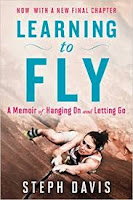
Learning to Fly

Hey everyone! Book #102 is Learning to Fly by Steph Davis, and you can see the review here.

Thursday, March 17, 2016

Brothers Vonnegut

"It was purely an internal matter. Every kid past sixteen knew this fork, what the good guys did here, and the bad guys. Good guys stayed true to their love of science, their pursuit of knowledge for the good of humanity. Bad guys were venal. They made choices based on money."
Ginger Strand
The Brothers Vonnegut

If this is your first time to this blog, I really, really love the works of Kurt Vonnegut. I think his books are brilliant, honest, funny, and heart breaking. He does a fantastic job contrasting what we do as a society and a species against what we know we shouldn't. Most people know him for his book, Slaughterhouse-five, his book explaining the firebombing of Dresden. Vonnegut's personal life greatly influenced his work. But I had absolutely no idea how much.

In The Brothers Vonnegut, Ginger Strand follows the lives of Kurt and Bernard Vonnegut just after the end of World War II. Bernie was a scientist working on atmospheric studies, and Kurt was a (secretly) aspiring writer. Both of them ended up working at GE, in New York, a place that was every scientists dream for the short peace that existed momentarily between WWII and the Cold War, where money was abundant and scientists were encouraged to follow their curiosities and to discover knew things about the universe. Kurt and Bernie saw as these discoveries and the prevailing attitude towards science shifted from one of creation to one who's purpose was for war. These tensions greatly shaped the brothers lives as they struggled with the same deep questions. They led Bernie to make great discoveries that still affect us today (Project Cirrus eventually let to an examination on how man effects climate), and the questions that Kurt pondered in his books are ones we must answer today. 

This book was fantastic. Strands storytelling is brilliant. It pulled me through the book quickly, and she moves between the two brothers flawlessly, brilliantly mixing their two stories to find the big questions surrounding science and morality that plagued both of them. She did a wonderful job relating both the technical scientific ideas and the complex moral ones, all while brilliantly relating the history of Project Cirrus, which changed the way we think about weather and climate. 

I highly recommend
this book.