Sunday, January 10, 2016

Pilgrim at Tinker Creek

"I'm getting used to this planet and to this curious human culture which is as cheerfully enthusiastic as it is cheerfully cruel."

"It has always been a happy thought to me that the creek runs on all night, new every minute, whether I wish it or know it or care, as a closed book on a shelf continues to whisper to itself its own inexhaustible tale."

Annie Dillard
Pilgrim at Tinker Creek

Pilgrim at Tinker Creek is a beautiful collection of observations that Annie Dillard makes about her home near Tinker Creek in Virginia over the course of the year. Starting at the end of winter, she describes her experiences of the place and how her observations shaped her world view, and how her world view shaped her observations and interactions with the other inhabitants at Tinker Creek.

I really liked this book. The way Dillard describes everything is fantastic. She has an incredibly unique way of describing her world. She asks questions and challenges the assumptions she has routinely, trying to reconcile the beauty and order that she finds in nature, with the harshness and seeming randomness that she also finds. She often describes this struggle using scientific knowledge that she has gained from books, and frames it against a backdrop of religious text. I really liked the scientific inquiry that she brought in, though her arguments and religious references sometimes seemed forced.

Her prose is phenomenal, the way she phrases things is beautifully blunt, whether talking about where she finds home or how unique having an interior skeleton is among most of the animal kingdom.

"The general rile in nature is that live things are soft within and rigid without. We vertebrates are living dangerously, and we vertebrates are positively piteous, like so many peeled trees."

She does a fantastic job making her statements about the way the world is intensely personal, which is a feat when so many pit us against nature: we are separated by clothes we've made and shelters we've built. She breaks down this barrier and makes the connections clear, all the while not discounting the differences between all living things.

This was a great read. I highly recommend it.
 

Saturday, January 9, 2016

New Blog, To Kill a Mockingbird, and Being Published

Really exciting news everyone!

First: I've been published! It's a review in the Durango Herald of the kids book the Star Bright Factory. I can now be a for real professional writer!

This might lead to a bit of a lag in post on this project, just because if I read a book and want to get it published I can't have it published online, Though things will get posted once they are in print or the pitch has been denied.

Second: New Blog!!!! It's the We Read Drinks project, where we read books and drink drinks. Books that I haven't read yet still count for this project. The first one we read is To Kill a Mockingbird. Which is awesome, check out the review at we read drinks!

Saturday, January 2, 2016

Happy New Year!!!!

Happy New Year!

As we slide from 2015 into 2016, I would like to participate in the tradition of reflection, and it comes to you like Aristotle's soul: in three parts.

First, I would like to apologize for only four posts in the month of December. Throughout the winter I work two jobs: one as a bookseller at a small, independent bookstore and the other as a rental tech at our local ski area. December is super busy at both, so I have mostly been working and sleeping. I promise over the coming months to read more and do better.

I would also like to look back at the books I have read in the past year, talk about my favorites and the ones I think are the most important. In the past year I have read 104 books, 80 of which are included in this project (twenty left, and four months to read them in). A mixture of fiction, and non-fiction (I've failed in the reading of a romance), I would like to give you two different lists: the 7 most important books I've read, and my 7 favorites.

The most important books I've read this year are:

1. Black Earth by Timothy Snyder
2. The World and Me by Ta-Nahesi Coates
3. 6th Extinction by Elizabeth Kolbert
4. All the Wild that Remains by David Gessner
5. Missoula by Jon Krakauer
6. On Immunity by Eula Biss
7. End of Night by Paul Bogard

My favorite books that I've read this year are:

7. War of the Encyclopaedists by Christopher Robinson and Gavin Kovite
6. Water Knife by Paulo Bacigualupi
5. Martian by Andy Weir
4.All the Wild that Remains by David Gessner
3.Frankenstein by Mary Shelly
2. Fates and Furies by Lauren Geoff
1. Black Sun by Edward Abbey

These are all fantastic and I highly recommend them.

Lastly, I would like to talk about what I am hoping to achieve in 2016. I'm planning on completing the Year in 100 books project. There are four months and 20 books left, and I am greatly looking forward to reading these books. I've really enjoyed this project and hope that I will be able to work on more projects like this in the future.

This year I will also be working on my first joint project. Andi (writer of the Survival of the Twenties), Arielle, and myself will be reading all of the books, and drinking all of the drinks in Tim Federle's book Tequila Mockingbird and writing about them. Check it out at We Read Drinks. Were hoping to have our first post out in the next couple of weeks.

I hope that everyone has had a wonderful New Years, and I hope that everyone will have a great year filled with wonderful books!

Friday, December 18, 2015

Eating Stone

"Homo sapiens have left themselves few places and scant ways to witness other species in their own world, an estrangement that leaves us hungry and lonely. In this famished state, it is no wonder that when we finally encounter wild animals, we are quite surprised by the sheer truth of them."
Ellen Meloy
Eating Stone

The world is a fantastic and complicated place, with fantastic and complicated creatures. Unfortunately, not much is known about many of these animals, pushed to the fringes before they are seen by many people. Southwestern bighorn sheep and one of these animals. Long thought to be on the declined and even extinct, they have in recent years made a comeback.

In Eating Stone Ellen Meloy describes her experiences with the Southwestern bighorn sheep, her observations from the river, back-country hikes. With beautiful prose and brilliant observations, she describes her connection with the wilderness and the bighorns and laments the growing separation of humans from the natural world, that the severance has left us spiritually lacking.

This book was spectacular, a truly amazing piece of nature writing. Her prose is beautiful, her story arc spectacular. Its a fantastic conservation piece examining the complexity of nature and the necessity for it. Everyone should read this book.

"That wild animals have largely moved out of our view is of a small note to many of us. We think, abstractly that they live out there somewhere, browsing or flying or killing or doing whatever it is they do, and we think that we are keeping them among us by the sheer force of our desire, even as we consume, insatiably, the places where they live."


Tuesday, December 15, 2015

Man in the High Castle

"They want to be agents, not the victims of history. They identify with God's power and believe they are godlike. That is their basic madness."
Philip K. Dick
The Man in the High Castle

We all play the "What if?" game. What if I had asked him out? What if I had quit this job, or gotten that one? What if that butterfly flapped its wings? Some "What ifs?" have small consequences, while others can be felt around the world. What if Guiseppe Zangara's assassination attempt had been successful? What if he shot Roosevelt in Florida in 1933?

These are the questions that Philip K. Dick asks in The Man in the High Castle. He shows us a world where the Allies lost the War, Germany and Japan control much of the world. Space travel has been achieved but television is still a work in progress in 1962. The US has been divided into the Pacific States of America (run by a puppet government controlled by Japan), the indipendent Rockies and Plains, and The United States of America (part of the German Empire). Death camps have been set up in New York. The governments are Fascist. 

The story follows several different characters, their stories weaving in and out. A Jewish man making a living in San Francisco after fleeing New York, a Japanese security agent, a German revolutionary trying to war Japan of impending attack, an American antiques dealer attempting to adapt to new markets, and a woman in the Rockies who is reading a book that tells what could have been. Their stories weave together creating a wonderful answer to the question of "what if?" while examining the ideologies and racism's that occurred after World War II.

I enjoyed this book. It was well written, adopting different voices for the many points of view that it follows. The characters were well rounded and unique, behaving believably as people might have had things been different. It was fast paced and exciting, one of those books you can't wait to find out what happens. I highly recommend it and I cannot wait to see the show that Amazon has made of it.
  

Monday, December 14, 2015

Fates and Furies

"Let me be the wave. And if I cannot be the wave, let me be the rupture at the bottom. Let me be the terrible first rift in the dark."
 Lauren Groff
Fates and Furies

Ever once in a while you read a novel that makes you fall so in love with the characters and takes you so by surprise that you find yourself thinking about it constantly for days after you've read it. Fates and Furies is one of these novels. Beautiful prose, fantastic storytelling, and one of the most interesting characters I have ever found in a book. Lauren Groff's writing style is fantastic, beautiful and absolutely unique. I've never read anyone who strings sentences together in such a wonderful way.

The story follows the lives of Lotto and Mathilde, two beautiful people who are madly in love with each other. The book follows the twenty-four years of their marriage through both of their perspectives. The result is a magnificent commentary on marriage, art, love, power, and how we perceive people. How we can know and not know a person.  

I loved this book. It builds beautifully, throwing in a twist that I did not see coming at the end. The characters were fantastically complex, and extremely relateable. The prose was beautiful, and the story structure was fantastically crafted, jumping forward and backwards in time.

 I highly recommend this book for everyone. Everyone.


Thursday, December 3, 2015

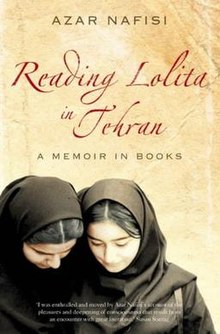
Reading Lolita in Tehran

"Do not, under any circumstances, belittle a work of fiction by trying to turn it into a carbon copy of real life; what we search for in fiction is not so much reality but the epiphany of truth."
"The desperate truth of Lolita's story is not the rape of a twelve-year-old girl by a dirty old man but the confiscation of one individuals life by another"
Azar Nafisi
Reading Lolita in Tehran

Fiction is important. It's a fundamental way to make sense of reality and practice empathy. The story of Iran in the past forty years is not one that we experience often in the U.S., let alone a woman's perspective. In Reading Lolita in Tehran Azar Nafisi tells of her experiences teaching western literature in Iran during and after the revolution, first at university, and later, in secret, holding classes in her home for her committed female students. She tells of their stories and their experiences as seen through the lens of F. Scott Fitzgerald, Jane Austen, Henry James, and Vladimir Nabokov.

This book was phenomenal. Part memoir and part literary critique, it offers an incredible in-depth look at the experiences of women in the Islamic Republic of Iran, their struggles with the restrictions of their personal freedoms, their arguments for and against the wearing of the veils,their stories becoming linked with the ones they read.

The writing in the book was fantastic. Nafisi is eloquent, her sentences are beautiful, and she tells her story with an incredible amount of compassion, teasing out the nuances of her and her students lives in the broader context of the politics of Iran, through the revolutions, the Iran-Iraq war, and the religious and political rhetoric. 

This is a book that everyone should read if the are interested in the Middle East, women's rights, or western literature.